Thursday, February 12, 2026

Privacy


I was shocked to learn the extent to which my privacy has been compromised in an online world. I always knew I had a lack of privacy, and I understood that most things I did on my phone were tracked and stored. However, I did not know just how little privacy I actually had. I always assumed things I looked up were stored in a database, and I had come to terms with that. I did not realize that every action I take on my phone could be recorded, allowing people to know everything down to the exact moment I wake up in the morning.

These issues affect me, my family, and my friends when that data falls into the wrong hands. For example, I am not worried about the government knowing what I do on my phone because they likely won't act unless I am involved in something illegal. What impacts me and those close to me along with everyone else is the data being recorded, used, or sold by private companies. That information should remain private, not be treated as a commodity.


The video about wiretapping was particularly interesting. I had never considered that the technological advancements we praise are the same ones causing us to lose our privacy. As a kid, I thought it was cool that the government could hack into enemies' phones to thwart attacks. It wasn't until I listened to the TED Talk that I realized that to identify terrorists, they often have to bug everyone’s phones or keep tabs on everyone’s messages. This in itself is a concern, but the real issue arises when a third party manages to hack that system and gains access to everyone's data.

To protect ourselves from invasions of privacy, we can move essential and private conversations offline. We should rely less on calling and texting for sharing sensitive information (even if some sources claim it is safe) and instead use those tools to set up in-person meetings. Most importantly, we must choose not to share anything online that could be misused to cause harm. I often find myself being too trusting of technology, whether I'm sharing an email password or saving credit card information on my phone. These videos showed me that my trust is misplaced; technology is no longer a guaranteed safe place for anything private.


Tuesday, February 10, 2026

Eight Values Of Free Expression

After learning about the Eight Values of Free Expression, there were a few that stood out in relevance to today’s society, which I quickly connected to current events. These principles help ensure a functioning society with high levels of involvement in government. The central meaning of the First Amendment is that it acts as a mechanism for participation in self-government. The Eight Values of Free Expression work to continue promoting participation in government and society. 

First is the Marketplace of Ideas by John Milton. Milton claims that when truth and false information are left without interruption, the truth will win out and shine clearly. This makes me think about "fake news" and how social media channels, such as Instagram and Facebook, used to try to censor and block fake news. Now, they are shifting to a community-based reporting system to block inaccurate information rather than 3rd-party fact-checking. In my opinion, this clearly shifts the goal to align more with Milton’s ideas: let truth win out over falsehoods.

It is clear that Participation in Self-Government is essential to a productive election and society. Elections are important because they give the public the opportunity to drive change. If you do not like a policy or how someone has acted in office, the election gives you the opportunity to keep that person out of office. If candidates were unable to share each aspect of their policies, then voters would be blind to essential issues that may change the outcome of the vote. At the end of the day, if you don't have access to the full picture, the value of a voter decreases instantly. Presidential debates before elections are key to this theory, allowing candidates to speak about whatever they would like in moderated yet open-ended debates.

I believe that a world where people can't share their "crazy" ideas is a world that never changes. Benedict Spinoza seems to agree with his idea of Stable Change. I believe that people sharing and saying what others see as stupid—or even evil in some instances—helps others create their own ethical framework. One example is the California mayor who suggested in a town hall to "give the homeless all the fentanyl they want" which would directly purge the homeless population. This comment immediately spread online and the mayor received mixed reviews; most were highly negative, but there was also some positive feedback. While some said his comments were inhumane, others claimed it would help shrink the homeless population. This is what Benedict Spinoza wanted: he wanted people to be able to share their crazy ideas so others had the ability to fight back against them. Due to the negative backlash the mayor received, it is nearly impossible for him to move forward with the idea. 

When I read C. Edwin Baker’s idea of Individual Self-Fulfillment, I thought back to high school and the story a teacher told us about students who wore armbands to protest the Vietnam War. She told us the story because many students planned a march during the school day to protest the lack of protection plans in case of an emergency. While the situations are very different, our teacher told the story as a way to support her students' thinking and planning without going against school rules by telling students it was okay to miss class. Upon thinking back to the story, I did some research to discover the story was incredibly famous: the case of Tinker v. Des Moines. The suspension of the students was argued all the way to the Supreme Court, where it was ruled that the students were well within their constitutional rights. This aligns closely with Baker’s idea that people need to be able to express themselves and create their own identity, just as the students did when they decided to protest the war. 

One of the most currently debated topics is the Check on Government Power. Many Americans feel as though President Trump has continuously overstepped his power as a president and, due to this, many want to see a change in office. While some are hoping for more immediate change, others just want to make sure they are made aware of any choices made in the Oval Office, especially any that people view as power oversteps. The press has been sure to highlight and share any power oversteps with the public, such as this article from CNN sharing a list of times "experts" feel Trump overstepped his power.

Very similar to how I view Stable Change as a way to help people create their own ethical framework, I view the idea of Promoting Tolerance from Lee Bollinger. The example that popped into my head almost immediately is how, legally, people can still claim they are members of the KKK or Neo-Nazis. Everyone can look at them and see their ideas are wrong and full of hate, but it’s essential for the world to not fight legally against those people so society can persecute them socially. Seeing those individuals helps others see how wrong their ideas are and helps them shape ideas and moral safeguards for themselves.

Promoting Innovation quickly reminded me of a story I heard as a kid and recently watched as a movie, The Boy Who Harnessed the Wind. The story is about a young man who, after being forced to drop out of school during a drought, decided to spend his time in the library looking for solutions. He finally made a makeshift wind turbine that inspired local villages to take a second look at everything and find ways to reuse and better use what was around them. Many people in his village, even his own mother, called him crazy for collecting scrap metal, but then he did it and inspired everyone. This story displays how promoting innovation will always help society move further and advance quicker.

While similar to the check on government power, I feel that Protect Dissent could be used to describe why people become "whistleblowers" on government missteps. No one wants to go toe-to-toe with or be on the bad side of the government. However, it happens when people learn of government wrongdoing and have the ability to create change and share that with the public. This is similar to when military officials criticize how specific groups of troops have been used. The ability to do this—and the fact that it is so strongly protected by the First Amendment—helps ensure the government is held in check and unable to make choices without the fear of retribution by its citizens. 

Friday, February 6, 2026

How Will AI Impact My Career

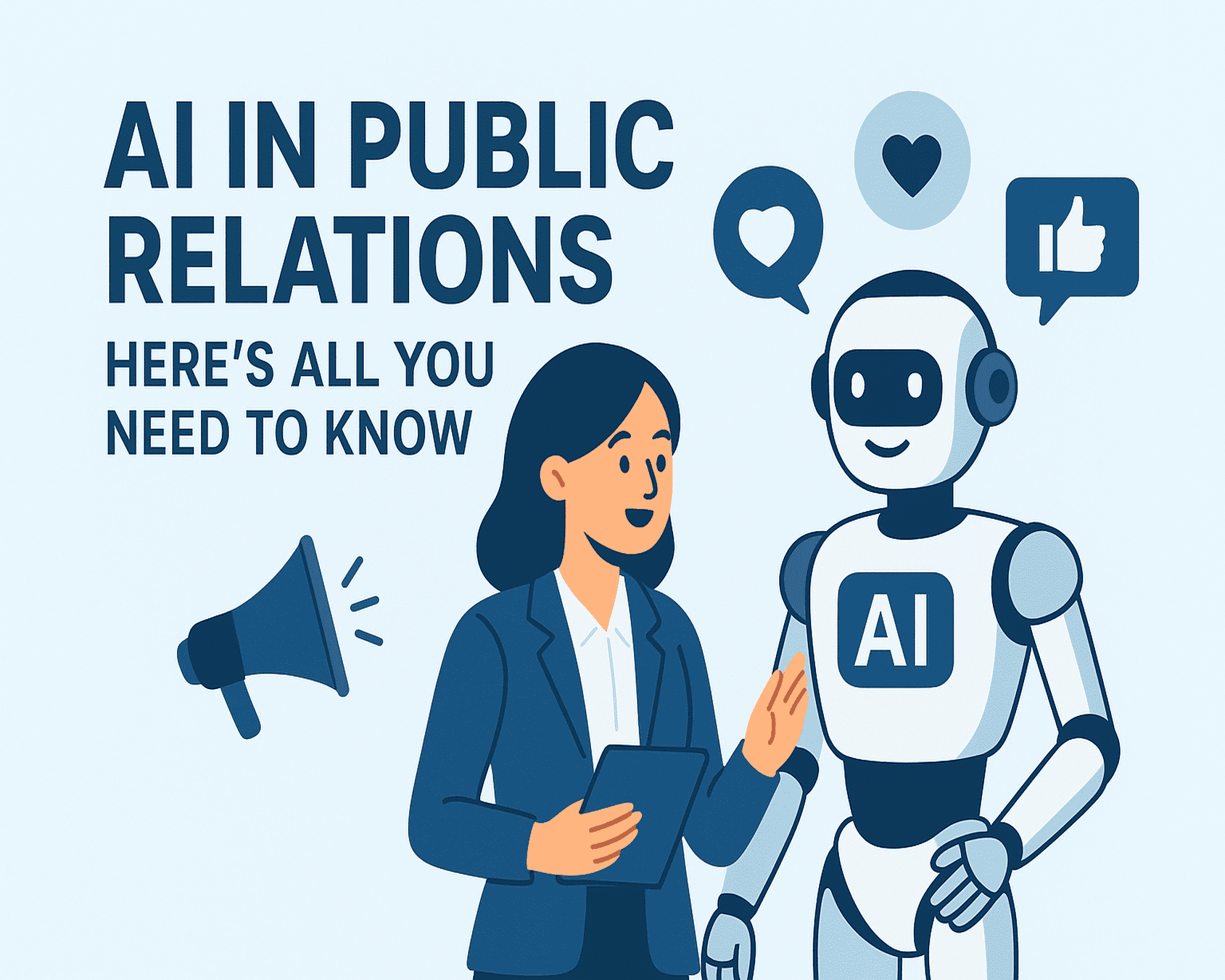
I study Public Relations and Advertising not because I know exactly what my future role will be, but because I know I fit the required skillsets. These skills can fulfill many different roles within a company, and I am confident that AI will not replace them due to the essential personal aspect of these industries.

Public Relations is vital to client management because consumers want to feel valuable enough to merit a human being's attention. When issues arise, people expect companies to assign a person to solve them, not a computer. Furthermore, Public Relations goes far than simply managing crises or fixing mistakes; it is about understanding cultural shifts and what the general public wants to see. A computer cannot interpret those ideas with the same level of detail as a human, which creates long term job security.

The industry is currently using AI to speed up and assist with tasks, but not as a total replacement for professionals. As Grant McLaughlin of the PRSA noted, it is up to "PR professionals to leverage AI’s computational and regenerative power while maintaining the human touch that makes communications most effective."

A second field I would love to enter is advertising. While AI can create ads or build marketing plans, I believe those ads would flop without a human brain to generate original concepts. The advertising world continues to move in new directions because humans are able to come up with fascinating, novel ways to connect with audiences. AI can recreate what already exists, but it cannot create what has not been invented yet.

In order for advertising to avoid becoming stale, humans must remain at the center of it. Personally, I am a strategist—someone who generates ideas and helps shape the vision of an ad rather than a "behind the scenes" designer. Those technical roles may face less job security as AI advances, because someone like me could take an original idea and use AI to generate high quality mockups or the final creative itself. While graphic designers in agencies currently give ideas life and offer different perspectives through their mockups, AI is becoming capable of providing those same changes and recommendations. Consequently, it very well may displace some of those technical positions.


Monday, January 12, 2026

My Top 5 News Sources- Blog Post #1

 My Top 5 News Sources

My top news sources are not typically considered conventional ways to receive new,s they are cues from others who share one aspect of a story that encourages me to do some digging on my own. Below will be an explanation of how and why these sources work in unison to keep me informed on major news within the world. 

#1Tik Tok:Tik Tok acts as my most used social media which means oftentimes the news I see is through Tik Tok from videos talking about events around the world. Tik Tok may be my most used news source but it is not a news source I rely on. Tik Tok being a place where anyone can post or share information plus the fact that the algorithm is created to show you content you like means it is not a place I trust information from. It simply acts as a place that shares when a major event happens so I can find further information. 

#2 Fraternity Group Chat: My fraternity group chat is highly active and people are often talking about recent news, especially when it is something shocking, such as a shooting. Which prompts me to look the events up and learn what actually happened, not what college men say happened because that story often varies from the truth or only includes aspects of the truth. 


#3 Google: Being conscious of how facts can be mis represented or stories can be created within Tik Tok or people in the fraternity sharing news events. I use google very frequently as a way to fact check and as my main source for learning details about major news events. While on google I click through the top few news outlets in attempt to avoid biases news stations often have in how they tell stories. 

 #4 Grandpa: I am in an incredibly lucky position to have a close relationship with my Grandpa. A relationship that includes weekly conversations, unlike myself my Grandpa spends the majority of his time reading about the news or watching the news. Being someone who spends their day reading article after article on cities such as Wall Street Journal or Fox. He almost always knows what is going on in the world before I do and often on our phone calls he talks about what is happening around the world. I am conscious of the fact that almost every news channel he gets his information from(even though he claims it is not true) is often a more conservative leaning channel of communication. 


#5 Instagram: Similarly to Tik Tok I use Instagram more then most other social media's and often see news posted on peoples stories or on my feed through news channels I follow on the app. This is another service similar to Tik Tok where I see some basics of news and then turn to other channels such as google to learn the true story or a more extensive version of the story. 


By utilizing these sources I have been able to stay in the loop with major news events and some less major yet still newsworthy events. I have never been someone who stayed in the loop with world events because I often feel they are negative however I try to ensure when events do happen that I ensure I know the necessary information


Privacy

I was shocked to learn the extent to which my privacy has been compromised in an online world. I always knew I had a lack of privacy, and I ...